Wednesday, October 31, 2018

Time to Turn Back the Clocks 2018


Problem: The hour time change disrupts sleep, hormone production, energy levels, mood and ultimately memory and mental function. There are even statistics linking acne outbreaks, increased heart attacks, strokes and traffic accidents to the time change.
Tip: Go to sleep 30 minutes earlier and wake 30 minutes earlier for 3-7 days before the clock change  to minimize stress, distress and dysfunction.
Tip: Get adjusted close to the time change to allow for better hormone balance and function.


Thursday, May 17, 2018

Power is back on in the house...

Yea!!!

After 36 hours and a lot of amazing work by the electric company, the town and county...not to mention police & fire departments and local ambulance corps THE POWER IS BACK ON!

Many of us will check on and dispose of perishables that did not stay refrigerated.


A good precaution is to also check the automatic ice cube dispenser if you have one. If water comes out when you go for that first glass of ice then water has been sitting inside the unit. Best precaution is to dump the ice and rinse the unit. Look inside. If there is a color on the plastic like black, green or orange, the unit needs to be thoroughly cleaned. (If you ever heard Chef Robert Irvine on his TV show scream about an ice machine this is what he found.)


Sunday, January 28, 2018

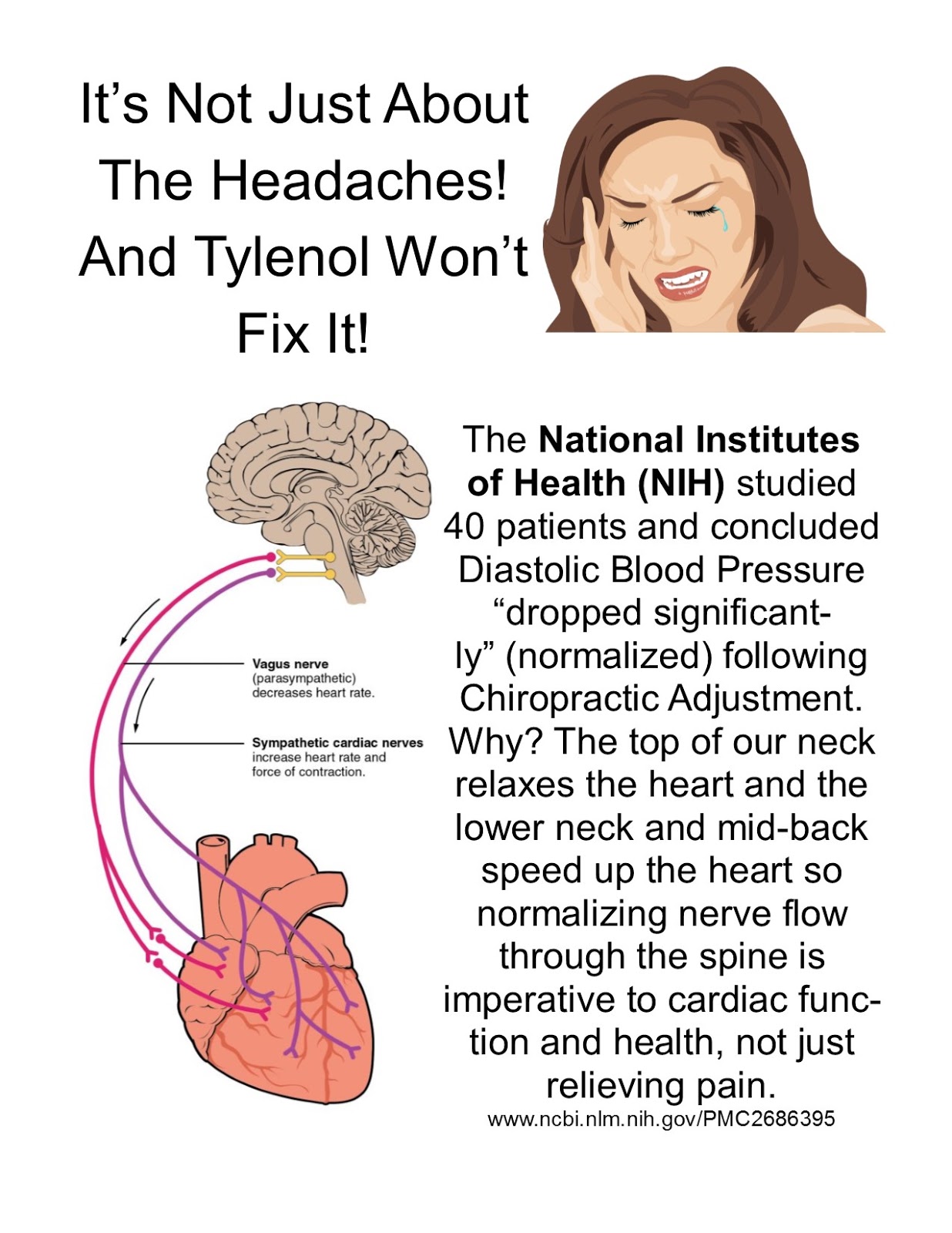
Diastolic pressure improvement seen with Chiropractic announced by NIH


Increase Energy and Decrease Inflammation in Minutes A Day
(and at very low cost!)
Part II
Today, I introduce the extra credit of increasing energy, lowering pain, inflammation, acidity and stress in minutes a day.
If you are already drinking lemon juice in water upon waking and want more easy steps to really just feeling better here are 2 ways:
1. Eat more dark green vegetables. Spinach, kale, and broccoli are examples of these natural sources of  healthy for muscles nutrients like magnesium and immune boosting beta carotene. Green vegetables also decrease acidity levels aka increase alkalinity in the body. As discussed in Part I in this Blog decreasing excess acidity lowers inflammation and increase health and well-being.

2. Instead of merely adding lemon juice to water and drinking on an empty stomach as discussed in Part I of this Blog on decreasing inflammation try blending a whole lemon! Yes, seeds, peel, the white pithy stuff, everything! I like to puree the lemon with ice to make an Italian style ice. Use an organic lemon to avoid the pesticides and the pesticides nasty taste embedded in the skin. Health benefits of the whole lemon include: Vitamin C and fiber which can help immunity, heart health, digestion, kidney health, be beneficial against anemia and more!

Saturday, April 29, 2017

Cheese vs. Cheese Food
What's the Difference?
Once again, looking at nutrition we start with my Mom, Diana.
 
Going shopping as a kid, my Mom always stopped us from buying Cheese Food, Cheese Food Product, Cheese Food Snack and Pastuerized Process Cheese Food (PPCF) along with any other deviants from "Cheese." So, what's the difference?

 
According to the Sargento Company website cheese is 100% cheese and cheese food or PPCF is something with a minimum of 51% cheese as an ingredient. Ouch.
Thus the name Kraft Singles on the package above. At least the PPCF is clearly noted after the word American on the label.


The Sargento website goes on to say that the following steps are how Processed Pasteurized Cheese Food/PPCF is created:


1. The process starts with a minimum of 51% real cheese.
2. This is ground down and may be mixed with any of the following items including artificial coloring, flavoring, other dairy ingredients, water, salt and mold inhibitors.
3. The mixture is heated to at least 150 degrees Fahrenheit for at least 30 seconds.

4. While heating, emulsifiers and acidifiers may be added.
5. The final product, with a minimum of 51% real cheese, is individually wrapped in plastic creating the Pasteurized Process Cheese Food (PPCF) found in the dairy department of your local supermarket.
 
"White American" what?
Pasteurized Process Cheese Product according to the small print on the side of the front label!
 
Now I am not saying the PPCF and similarly named items don't taste good, aren't less expensive sometimes, aren't easier to separate slices or don't have some nutritional value. I do think we should look over the ingredients list when purchasing. Or, as my Mom would say, "no, we can't buy that. It's not real cheese."
 
 
Here is the list of ingredients in Kraft Singles according to the Huffington Post along with some editorial comments by me in blue ink:
  • Cheddar cheese (milk, cheese culture, salt, enzymes)
  • Whey (by-product of the production of cheese. It is what's left when the cheese curdles are strained)
  • Water
  • Protein concentrate (what is that exactly?)
  • Milk
  • Sodium citrate (more salt)
  • Calcium phosphate (according to Rodale Organic Life, and researcher Janeen Leon, high calcium phosphate levels are associated with higher mortality and kidney disease rates, heart disease, weakened bones and decreased Vitamon D activity.)
  • Milkfat
  • Gelatin
  • Salt (more salt)
  • Sodium phosphate (more salt and see the problems listed above with calcium phosphate)
  • Lactic acid as a preservative (Does lactic acid sound familiar? It's the waste product from muscles that causes leg cramps)
  • Annatto and paprika extract (used for color and only small amounts but these two items actually have some mild nutritional value)
  • Enzymes
  • Vitamin A palmitate (hey, a little nutrition added!)
  • Cheese culture
  • Vitamin D3  (hey, some more nutrition added!)

  • I would like to add at this point that when deciding on which cheese to eat often opt for the harder cheeses. Why?
    1. They have generally have required more enzymatic reaction to create  so in essence they are "pre-digested" making them more easily digested when eaten and therefore often produce less gastric upset.
    2. They are often  made in smaller batches with less "chemicals" and additives.
    3. They are less often artificially softened.
    The nerves of the spine help regulate
    digestion and elimination
    4. We have a lot of new patients come to the office saying they can not tolerate dairy. The Chiropractic adjustment often helps their digestion which in combination with picking less artificially produced cheeses and decreasing amounts and frequency of eating dairy allows the person to return to eating dairy if they choose.
    5. There is debate over the nutritional necessity of eating dairy:
       Pro- source of calcium, potassium, Vitamin B-12 and helps regulate phosphorous in the boday, source of protein and fat.
       Con-sometimes hard to digest, not highly absorbable form of calcium in milk, common allergies and intolerances to milk, weight gain association.
    Not sure what is best for you? Contact me here on the BLOG or call for a free 15 minute phone consultation.


    Thursday, March 16, 2017

    A study of 100 volunteers showed improved brain function in 4 tested areas including greater "brain relaxation" after a Chiropractic adjustment as measured by EEG!
     
    Is it no wonder that kids perform better in school and their parents credit their Chiropractic adjustments?
     
    Research presnted at Sherman College of Chiropractic Symposium

    Saturday, February 18, 2017


    How Many Bones In A Giraffe's Neck?

    When my daughter was four years old we were visiting the San Diego Zoo. I was holding my daughter in my arms as we looked up at the giraffes. A docent (volunteer) tour guide came by with a small group on a tour and stood next to us. The tour guide explained to the group that a human has 7 bones in the neck. She asked how many bones do they think might be in a giraffe's neck? Without hesitating my daughter promptly answered the question correctly "seven!" The docent was shocked as no one apparently ever gets the answer correct and usual guesses ranged in the twenties, thirties and beyond. It helps to be the Chiropractor's daughter in this challenge, I guess.

    The question is why are there always 7 bones in the neck of mammals?
    The functioning of the neck is so critical to life that if one is born with 6 or 8 cervical bones they will surely not live! Infact, of all the mammals, only the super slow moving slouth can live if they are born with 6 or 8 cervical bones!

     
    Heart rate, respiration, digestion, blood pressure and just about any function you can think of in the body is regulated, controlled and influenced by the cervical spine, our neck!


    Saturday, February 4, 2017

    Sharing an interesting illustration....Hope you enjoy, Dr. Andy


    Monday, January 30, 2017

    Low Thyroid Undiagnosed?

    Low Thyroid Undiagnosed?
     
    I am sharing this interesting article by Dr. Raphael Kellman. While I believe there are also natural ways to enhance thyroid function, besides pharmaceuticals, Dr. Kellman has presentented an excellent article on the diagnosis of low thyroid and how it may often be missed as a proper diagnosis. (And how are you going to fix something if you don't even know that there is a problem?) I hope this helps many people who are suffering needlessly to find answers to their health care. I am including his contact info. If you would like to contact me about any natural approaches to thyroid dysfunction please use the comment box below or call my office at 973-625-2600 for a free 15 minute phone or in office consultation. 
    Wishing you great health, Dr. Andy Smith
     
    This originally appeared on-line in the Huffington Post. Here is the original post if you prefer:
     
    Dr. Raphael Kellman Author of The Microbiome Diet and the founder of the Kellman Center for Integrative and Functional Medicine.
    All too often the routine blood tests fail to detect a significant percentage of low thyroid cases. Frequently sick patients are told their labs are normal, with values falling within reference ranges, yet they are suffering. Symptoms can be debilitating and may include depression, anxiety, unexplained weight gain, severe fatigue, hair loss, brain fog, constipation and sleep issues. Women often have menstrual cycle irregularities and trouble getting or staying pregnant. I see it every day. It’s unfortunately common and estimated that half of all thyroid disorders may be undiagnosed, leaving patients to suffer without treatment options.
    The lab range used for routine testing has been a controversial topic in medicine in recent years. There is much debate and arguing as to what the actual range should be and what normal is. I began to examine this issue in the ‘90s in response to seeing literally hundreds of patients with thyroid-type symptoms and all with normal test results.
    First some background: The thyroid is a small butterfly-shaped gland located at the front of the neck just under the voice box. It produces hormones T4 (thyroxine) and T3 (triiodothyronine) responsible for driving energy production and metabolism in every cell in the body. Having the right amount is critical to good health and imbalances can manifest in many different ways depending on which tissue is affected.
    Most doctors today diagnose thyroid disorders by doing a simple blood test to check levels of TSH. Some also include levels of T3 or T4. Thyroid Stimulating Hormone is released by a gland in the brain called the pituitary. As the name suggests, this is the way your brain talks to the thyroid to stimulate output. More gets released when thyroid function is low and not producing enough T4 and T3 to regulate the body. A high level of TSH is the brain’s way of saying, “hey thyroid, you need to work a little harder.” A TSH value that’s higher than the lab range means function is very low and needs a push-sometimes in the form of medication.
    Seems straightforward, but what level is considered high enough to treat?
    Some doctors are still using the old standard and consider a TSH level over 5 mlU/L worthy of treatment. This isn’t accurate, according to research. The American Association of Clinical Endocrinology currently recommends treatment for anyone over 4.1. Interestingly, back in 2002 they made a statement recommending a limit of 3mlU/L. The National Academy of Clinical Biochemistry however, has recommended beginning treatment at 2.5.
    A study from 2005 concluded that the accepted reference range of 4.5mlU/L was too high and no longer valid due to A) increased sensitivity of testing assays and B) contamination of those ranges by including people with various levels of thyroid dysfunction who actually increased the average TSH level (1).
    Why is all of this important? Inconsistencies and changes in reference ranges can be the difference between sick patients getting help or being told they are fine and denied treatment.
    On a deeper level, Andersen et al studied this issue and found a huge difference between the population and individual reference ranges. A test result falling within the normal lab reference limit is not necessarily normal or optimal for the person being tested (2). I treat people, not their lab results. As clinicians we have a duty to practice personalized medicine based on the specific needs of each individual.
    More problems with standard testing...
    Thyroid hormone resistance cannot be detected on routine tests. Studies point out that levels of thyroid hormone can test normal in blood but may actually be low in the tissues that so desperately need it. Patients with reflux and Alzheimer’s were found to have lower levels of T3 in esophagus and brain tissue than normal controls. Both groups tested normal on routine blood tests.
    For some patients with hypothyroidism, the TSH levels may not rise in the blood. I see this frequently too. The TSH will be perfectly normal or even low due to a variety of mechanisms. Routine tests then will be unable to detect it.
    Thyroid panels are too limited. A more comprehensive test would include looking beyond TSH to total T3 and T4, free T3 and T4, Reverse T3, and antibody levels commonly found with Hashimoto’s disease (the most common cause of low thyroid function). I use an expanded panel plus a highly specialized test called the TRH stimulation test.
    TRH — Shining a light on undiagnosed low thyroid.
    For almost 20 years, I have relied on a much more sensitive test called the TRH stimulation. This is a three-step challenge similar to a cardiac stress or glucose tolerance test. Thyrotropin Releasing Hormone is a natural compound normally made in an area of the brain called the hypothalamus. In this test, a small amount is injected into the patient, triggering the pituitary to release its stored TSH on command. Even if the TSH level is normally low in the blood, it will be quite high within the pituitary gland itself in cases of underactive thyroid. Upon stimulation, TSH will surge into the blood causing levels to rise to easily detectable levels. Because of this, I am able to pick up on cases of hypothyroidism at the onset of symptoms, sometimes years before the TSH reflects the disease.
    There was a time when all doctors used the TRH. As medicine made advances and assays became more sensitive, the TSH replaced it becoming the widely accepted way to diagnose thyroid disorders. Doctors embraced the ease of doing one simple blood draw and lowered costs. The TSH does work to diagnose a large number of people every year, but it misses too many leaving them needlessly suffering.
    Shortly after this change in testing methods took place, I noticed a huge rise in unexplained chronic fatigue cases. There was an epidemic in patients complaining of thyroid-like symptoms-all with normal lab results according to TSH levels. So back in the ‘90s I began working to find a way to bring back the TRH test. It wasn’t easy but the results were amazing. So many of those with unexplained pain, symptoms and chronic fatigue actually turned out to have very treatable hypothyroidism.
    Patients are more than a collection of lab numbers! Strictly relying on routine tests without careful consideration to how they feel doesn’t serve them. It’s about digging deeper, looking for function through provocation and shuffling things around in order to get to the truth and corroborate what patients already know. Who you are, how you feel, your lifestyle and comprehensive testing make up the whole and weave together to form the blueprint for treatment and the road to recovery. The art of medicine is just as important as the science.
    Sources:
    1) Wartofsky L, Dickey RA, The evidence for a narrower thyrotropin reference range is compelling. J Clin Endocrinol Metab. 2005 Sep;90(9):5483-8.
    2) Andersen Stig, Michael Klaus, et al, Narrow Individual Variations in Serum T4 and T3 in the Normal Subjects: A Clue to the Understanding of Subclinical Thyroid Disease. Journal of Clinical Endocrinology & Metabolism 87(3):1068-1072

    Monday, January 9, 2017

    Can Chiropractic Care Help Anxiety & Depression?

    Can Chiropractic Care

    Help Anxiety & Depression?


    A study published in the 2013 Journal of Upper Cervical Chiropractic Research supports
    Chiropractic care improving stress symptoms. Chiropractor, author and JUCCR study researcher Dr. Larry Arbeitman said "Four of the five study completers expressed satisfaction with the outcome and that they would recommend similar care to others with anxiety or depression...participants also reported a decrease in muscle tension and pain and an increase in mental clarity and physical energy." While this study was a small group and the particiants only received 12 adjustments with only one vertebrae adjusted per adjustment this study does support the empirical evidence and experience of a large number of Chiropractors that patients under Chiropractic care handle stress better, feel better and most importantly perform life's daily activites better.

    Want to discuss if Chiropractic may help you? Please feel free to call my office at 973-625-2600 and ask for a complimentary 5 minute phone consultation. I'll call you back at your convenience (after or before my office hours) and answer any questions you have.

    And yes, Chiropractic is appropriate for children with these disorders. Thank you to my patients for again voting me as one of New Jersey Magazine's 2016 Favorite Kids Docs.

    Source: American Chiropractic Association, Journal of Upper Cervical Chiropractic Research

    Monday, December 19, 2016

    Increase Energy and Decrease Inflammation in Minutes A Day (and at very low cost!)
     
    25 years ago when I was an intern at the New York Chiropractic College Outpatient Clinic in Levittown, Long Island I would read the latest medical research and tell my patients that in 25 years I believed their doctors would more and more treat their diseases not by looking at their symptoms or diagnosis as much as looking to lower inflammation in their body. This, of course, made great sense to me as I was trained as a Chiropractor to look to the cause of the problem and not just at eliminating symptoms. That focus on cause correction plus the research showing that heart disease and so many other problems in the body were created or at least exacerbated by inflammation made the conclusion a no-brainer. My observation that research often seemed to take 25 years to "get into the field" made me excited for the day that patient care would improve by leaps and bounds as people's troubles would be cared for in a much more effective, speedy and intelligent way. Unfortunately, the truth is I'm still talking about the future of medicine 25 years later without much change in the medical approach. Please understand I am not taking a shot at medicine but rather hoping for a better future for mankind and allowing all of those wonderful and talented minds that enter medicine to better take care of their patients.
     
    First we must relize that stress, inflammation and acid levels in our body are NOT synonymous but ARE very much related.
     
     
    Physical, emotional and chemical stress all eventually create acid and inflammation. Oddly, acid can lead to inflammation and stress while inflammation can lead to acid and stress so they all tend to make each other worse.


    We can try to lower stress but we also need to figure out ways to better deal with stress, inflammation and acid and the havoc these 3 create in our body.
     
     
    One might be tempted to take an anti-inflammatory medication but these medicines are generally not recommended for long-term use due to side-effects and long-term use could disrupt immunity and tissue repair as the white blood cell function is curtailed by the use of anti-inflammatory drugs. (White blood cells help us to fight infection. The inflammatory process also helps remove damaged tissue so that our body can repair itself by replacing the damaged tissue with healthier cells.)


    What can you do today? Scroll Down.
     
    After trying to lower stress and decrease actions that cause inflammation we are still often in trouble. The good news is that since stress, inflammation and acidity levels are related, lowering one can help lower all three and while it may be difficult to lower many types of stress and inflammation directly it is relatively simple and inexpensive to reduce acidity levels in the body on a daily basis. How? Eat foods that decrease acid levels.
     
    Less Acid is also called Increased Alkalinity.
     
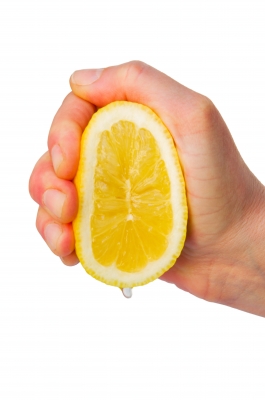
    Can you squeeze a lemon?
    One of the least expensive and simplest foods to prepare that decreases acid in the body is fresh lemon juice squeezed into water. Drink on an empty stomach. Wait at least 20 minutes to eat your meal. Seems odd, I understand, to add the acid of a lemon to get less acidic. This works when taken without food and preferably on an empty stomach. We drink the lemon water and apparently the brain senses the increased acidity and signals the kidneys to remove acid from the blood leaving the body with less acid aka more alkaline. (This apparently is the mechanism for apple cider vinegar, also. Doesn't taste as good but feel free to do a shot of ACV instead of the lemon water if you choose.)
     
    Try this daily for a month and let me know if you feel more energy, less achiness and pain, enjoy better sleep, feel stronger immunity and maybe even take off a pound or two.
     
    Want more ideas on decreasing acid, inflammation and stress? See Part II of this series.

    Wednesday, April 6, 2016

    List of chemicals to avoid in cleaners and how to make your own natural cleaners on previous April blog. Dr. Andy

    This is Easy. To Avoid This --->
    Follow This Guide To Safe Lifting--->
     
    Any Questions? Give Me A Call at 973-625-2600 Dr. Andy Smith

    Sunday, April 3, 2016

    Looking for Natural, Safe, Non-Toxic Cleaning Solutions?
    Here's A list of What to Avoid and How to Make Safe Alternatives At Home That Really Work!
    (Thanks to Eco-Smart Products for their help in these ingredient lists.)

    ecebcf4a363eeb1f_shutterstock_117715075.jpg.xxxlarge_2x All-Purpose Cleaner
    Worst ingredient: Butyl Cellosolve is a suspected carcinogen potentially damaging to bone marrow, the nervous system, the kidneys and the liver.

    Natural All-Purpose Cleaner Recipe:
    1 gallon hot water
    1/2 cup liquid castile soap
    10 drops essential oil (optional) like lavender or thyme

    Room Deodorizer
    Worst ingredient: Formadehyde can trigger respitory problems and has links to cancer. Butane (in air some air fresheners) is a brain and nervous system toxin. Benzene, also in some air fresheners, has been linked to leukemia and nervous system damage.
    Natural Room Deodorizer Recipe:
    2 cups water
    15 drops thyme essential oil
    15 drops tea tree essential oil
    10 drops oregano essential oil

    Glass Cleaner
    Worst ingredients: Glycol Ethers have links to adverse effects on the liver and kidneys.
    Natural Glass Cleaner Recipe:
    1 cup white vinegar
    1 cup water

    laundryLaundry Detergent
    Worst ingredient: Nonylphenol ethoxylate degrades into a powerful bioaccumulating endocrine-disruptor. This chemical is banned in Europe.
    Natural Laundry Detergent Recipe:
    7 quarts hot water
    1 cup soap granules
    1/2 cup borax
    1/2 cup washing soda
    20 drops essential oil (optional) such as lemon or lavender

    Saturday, March 5, 2016

    On June 25, 2014 my Blog page described how much water we should drink per day based on individual needs (as opposed to EVERYONE needing 8 glasses of water per day.) The University of Illinois recently released research that increasing water consumption by even one glass per day has significant health benefits including weight loss, decreasing cholesterol, etc. For more info check out the 6/25/2014 blog post. Drink up and live with Passion! Dr. Andy

    Monday, February 8, 2016

    Here's a letter that I think really sums up how Chiropractic can help children. I had tears in my eyes reading this. Thank you for sharing with us, Josh.


    Hi.  My name is Joshua Janes and Dr. Andy has adjusted me since I was a kid.  I had a hard time in school.  I couldn't sit still, focus on what was being taught or read my assignments. I felt "not so smart" and got in trouble for being the "class clown" a lot.  When my mom learned about Chiropractic I was about 12. I had been diagnosed with ADHD with the high end of hyper.  I struggled to learn and not get into trouble.  I would read the same paragraph over and over and get mad because I couldn't remember what I had just read.  My mom tried to help with routines and not letting me eat junk or have caffeine or anything with red dye in it.  I was never put on medication like my other friends and I'm glad because they all went through some tough times in life stemming from that. After my first adjustment I didn't feel any different but after getting adjusted for almost a year I asked my mom to buy me a book.  She started to cry because I had never asked to read anything I didn't have to.  I started to read!  I read the whole Goose Bump series in a few weeks.  I started to read Time magazine and everything I could get my hands on.  In my early twenties I started writing books for fun.  Today, I do analytical research for a large company in Scotland.  I am grateful for Dr. Andy's adjustments and how they have changed my life.
    Sincerely,
    Josh
    And thank you Jamie for the kind words and letting others know how Chiropractic can help them.


    Dear Dr. Andy,


    Since you have been adjusting me, my health has improved greatly.  Prior to Chiropractic adjustments I had high blood pressure and chronic neck pain/headaches as well as sciatica.  All of these symptoms have disappeared with the continuous Chiropractic treatments. 


     As a former health care worker, I had previously relied on 'traditional medicine', which only masked the pain and temporarily cured the issues.  Chiropractic actually works and I will be forever grateful for your knowledge and skill.  Because of this, you have cured me of these medical issues.


    Thank you, thank you, thank you,


    Jamie M. Willis
     
    Nadine DeVries Weise
    PS
    I can't believe I forgot to mention that before Dr. Andy Smith worked to straighten it out. I had started to have a twist to my spine where I was feeling like my right leg was shorter. That has been gone for a while so I forgot about it.

    I was 5'7" but over the years I lost an inch to 5'6" I now have my inch back.

    Dr. Andy Smith has worked on my neck to make the turning smoother again. He did that so long ago I had forgotten about it. It still acts up now and then when I sleep funny but what he does makes me mostly forget that I have the problem which was caused by a car accident where a drunk diver hit my car in 1983.

    Really I'm most greatful!
    Once again,
    Thank You Dr. Andy Smith

    Monday, February 1, 2016

    Such a beautiful letter from a patient came to me today on Facebook. I thought I would share it so that others can know what Chiropractic can do for them. Dr. Andy


    Nadine DeVries Weise My favorite Chiropractor is:
    Dr. Andy Smith!

    Without his skills I would be walking with two canes in constant extreme pain. Some days not being able to walk at all.

    Most of my pain is gone due to his skills.

    I still have some pain and need to use one cane due to a fall that damaged my knees and back but I'm in the least amount of pain since the fall.

    My asthma is much better I can feel the difference instantly when he works on the right spot. It is more noticeable and effective than using my inhaler.

    Too bad I can't carry him around in my pocketbook.

    My range of motion has also improved making it more possible to take care of my personal needs.

    My diabetic neuropathy in my feet is so much less and my knees don't click in and out since he started to adjust them.

    My jaw was having a problem with alignment and I didn't even tell him about it. He knew which direction to adjust it. It only took one adjustment and the tension is gone.

    Thank you,
    Dr. Andy Smith

    Denville Chiropractic Associates
    973-625-2600

    Saturday, January 9, 2016

    My Mom and the Dorito Effect-Part 3-The OJ Connection


    My Mom and the Dorito Effect, Part 3

    The OJ Connection

     
       Growing up we usually made orange juice from those cans of concentrate sold in the frozen aisles of supermarkets. Just add water, stir and you have it. Plenty of nutrition and good taste.

    Of course there were those Sunday mornings without school and some other special meals that my Mom or Dad and later us kids would make the best tasting juice of all...fresh squeezed!


    Until we found out about a great innovation:

    "Not From Concentrate"


     "Not From Concentrate" absolutely seemed to be the best of both worlds. Great taste, great nutrition and no work. My family, like many other familes, have certainly invested a lot in "Not From Concentrate" (NFC) over the years but it certainly seemed worth it to get that great nutrition and taste with no muss, no fuss. Then  a couple of years ago my patient Michele came to me one day to discuss "flavor packs." She educated me about a book written by Alissa Hamilton in 2009 called Squeezed: What You Don't Know About Orange Juice that discusses a so-called dirty little secret of the orange juice industry.

    Fresh squeezed orange juice unfortuantely has a very short shelf life. Add to this issue that the orange harvest season in Florida is only October through April. That leaves half a year without fresh squeezed Florida orange juice on the shelves. The juice suppliers came up with a solution. Pouring the juice into a large aseptic storage tank and removing the oxygen allows the juice to be stored up to a year without going bad. The problem is that removing the oxygen also removes the flavor. "Flavor packs" are created from the skins of the orange. Essential oils and essences are removed from the skins and put back into the juice prior to bottling. This includes the use of deriving chemicals like ethyl butyrate from the orange skin and using the expertise of fragrance manufacturers to create a juice that tastes the same whether purchased in spring, summer, fall or winter. Think about it. When you juice those oranges at home you usually get a great tasting juice. Go back to the supermarket next week and buy the same oranges and the juice tastes different. Try a different variey and the juice tastes different. Squeeze oranges at home from Florida, California and Brazil and the juice you make tastes different. Read the orange juice box label and you'll often see that the oranges for "NFC OJ" often come from Brazil. Yet that glass of Pure Premium Tropicana or No Pulp Minute Maid and most of the other "Not From Concentrate" juices taste the same month after month year after year regardless of rainy weather,early frost or any other conditions. The use of the flavor packs also allows the manufacturers of the juice to market a consistent, preferred taste. Yes, just like the tomato soup and the fast food burgers.


    Interestingly, the orange peel does include healthy nutrients, like anti-oxidents, fiber, vitamin C and pectin, but whether the addition of the peel is helping us is assuming we are not consuming additional pesticides in the peel. Since the major juice manufacturers do not like to address the flavor pack issue and the FDA does not require the listing of the chemicals derived from the skin (because technically all of the ingredients come from oranges) we do not currently know if the flavor packs affect the nutritional value of what we buy at a premium over the cost of the frozen juice from concentrate. I do think the public should be aware of the process and keeping the public in the dark is at least a deceitful type of practice allowed at this time under rules of the FDA. Again, we can look back at my Mom's observation from forty something years ago and realize that "something is being done" to our food supply.

    To be continued...Next, that Dorito thing.